

Writing that headline made me thought, what an oddly specific post for thepartyparallel. But why not, you might find yourself in a situation where you have time to explore Sri Lanka, and feel the need to avoid the crowds while saving a dollar or two. And isn’t travelling an amazing hobby!?
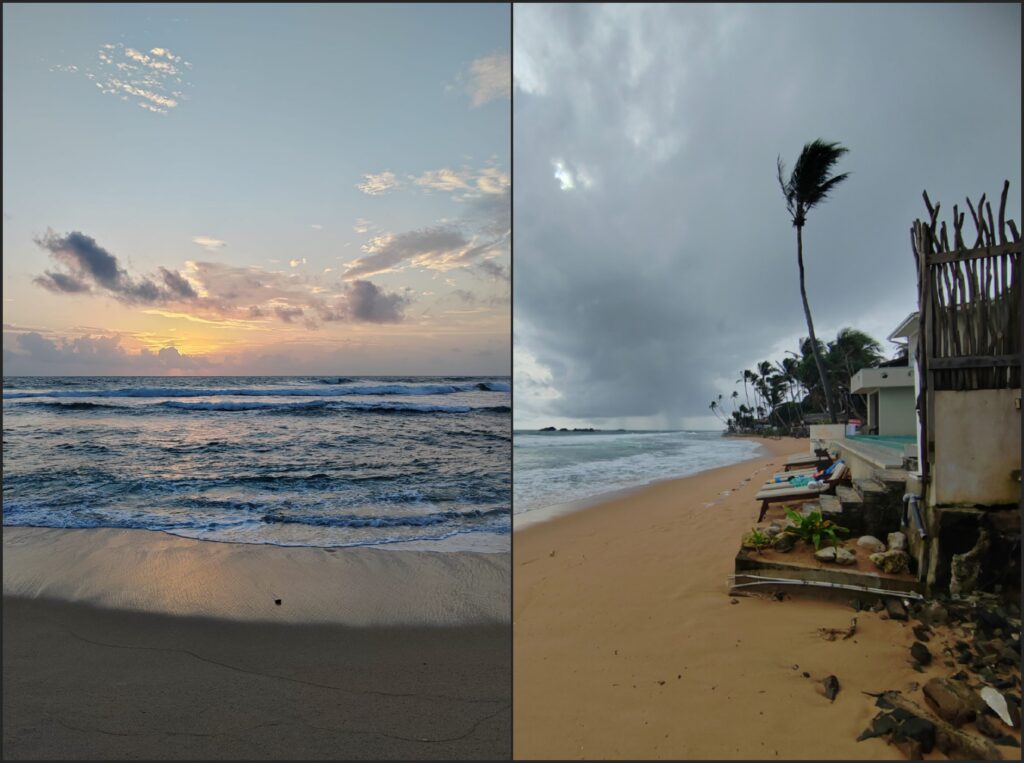
If that happens to be between May and October, you can experience the southwest monsoon in Sri Lanka. That’s the main direction of the wind, meaning on the southwestern coast is where it’s windy and rainy. So why would you want to go there? Because it is quiet. You’re often the only guest in a restaurant or hotel, think of the pool! For sure some places are closed, and the internet would not know. So you might pick a restaurant just to find the chairs on the tables and lights off. But if you can live with these limitations, you’ll enjoy empty beaches, a picturesque rough sea, and a relaxed atmosphere. And with a bit of luck the sun will shine for you!
That’s what I found in August and September, and now I’m sharing my thoughts and impressions on Sri Lanka’s beaches in the southwest monsoon. My brief summary: it’s more than worth it!
If you’re looking for sunshine, crowds and calmer waters in September, Arugam Bay or Trincomalee are the places to go.
Bentota: Two extremes and a crocodile spot
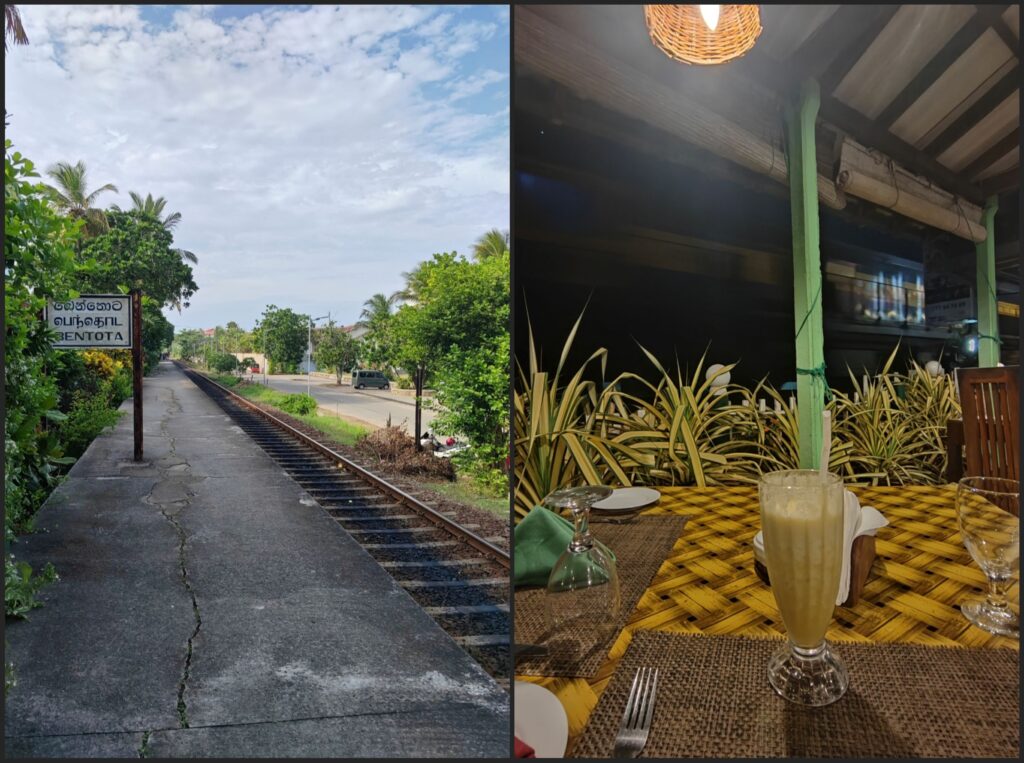
Bentota Beach was an extreme experience. Looking back I would say it was quite fun to be there. One extreme experience is the proximity to the trains. The railway tracks are very near to the beach, basically behind the main beach road. Many hotels and restaurants are right next to railway stations and tracks. If you are tempted to visit the Mae Klong Railway Market (Hoop Rom Market) in Thailand, or the Hanoi Train Street in Vietnam, maybe Bentota is a good compromise for you. It seems rather safe, because you have a few meters distance to the trains. The experience is still absolutely impressive. Imagine eating in one of those restaurants along the tracks, and suddenly a massive noisy and fuming train drives past, so near that you feel the vibration in your stomach and you can see the passengers eye to eye. Same goes for your hotel room! Why not?!
The other extreme is the beach itself. Since you are only 60 kilometers away from Colombo, it is no surprise that this beach is popular. On weekends and holidays many locals enjoy Bentota. That leads to a crowded and buzzing spot. And in contrast just a hundred meters to the right you still find a kilometer of almost untouched beach! No bars, no shops, just pure sand and quietness! Not sure if swimming is encouraged there since there are no life guards, but for sunbathing and walking the northern part of Bentota in September was fantastic.
The main selling point in Bentota is the lagoon with wild crocodiles. I did the tour, a bit too late in the evening, and saw nothing. The locals are quite eager to get you in the boats, and I found the whole crocodile tour business rather disappointing. You will be able to see lots of fruits bats over the water in the evening without paying for a tour. There’s also a spice garden (with poor reviews), and Brief garden, both I did not visit.
The etymology of Bentota is quite interesting, it comes from a mystical creature called Bem, and the word for riverside, tota.
Mirissa: Small beach, large overhead
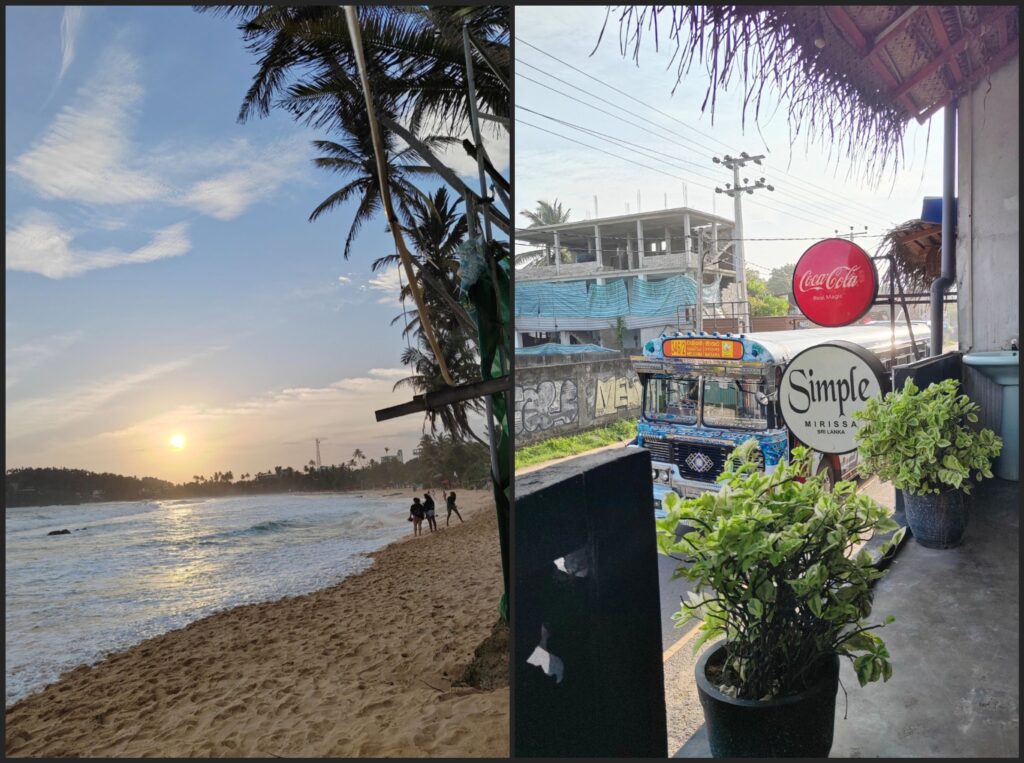
Mirissa Beach is famous, and surprisingly small. When you see all the shops and restaurants behind it first, you would expect a huge beach area. I’ll call it a large overhead, which made me wonder how busy it gets in high season. For low season, this beach had a nice balance of a busy road in the back, good restaurant choices, and a relative lively beach. Some beach bars were open, so that you had the almost full vacation vibes here in September!
The main road was very busy though, and I didn’t enjoy walking there. Mirissa seems to translate to ‘little chili’, and maybe the traffic spices up the experience of walking around Mirissa.
Further east at the end of the beach there’s parrot rock, a small hill/ rock where adventurous people climb up. From there a dark and narrow kind of promenade brings you to Turtle beach, and later Coconut tree hill.
In Mirissa whale watching is a big business. While many tour operators show spectacular photos of breaching humpback whales, it is much more likely that you see a blue whale, or even more likely dolphins. As almost anywhere, there are ethical concerns around whale watching tours. Low season is not the time for whale watching, you would have to try it between November and April.
Tangalle: Fish and rocks in the west
I was staying in the very west of Tangalle, close to the fishing area. That fishing area has nothing to offer but a bit of a shock for the eyes and the nose. Further west the road goes up a hill, and instead of beach you have a cliff with a nice view. If I got it right, these rocks could be the name giving feature of Tangalle (meaning projected rock). Almost 2km from there you’d reach Silent beach. I did not go there.
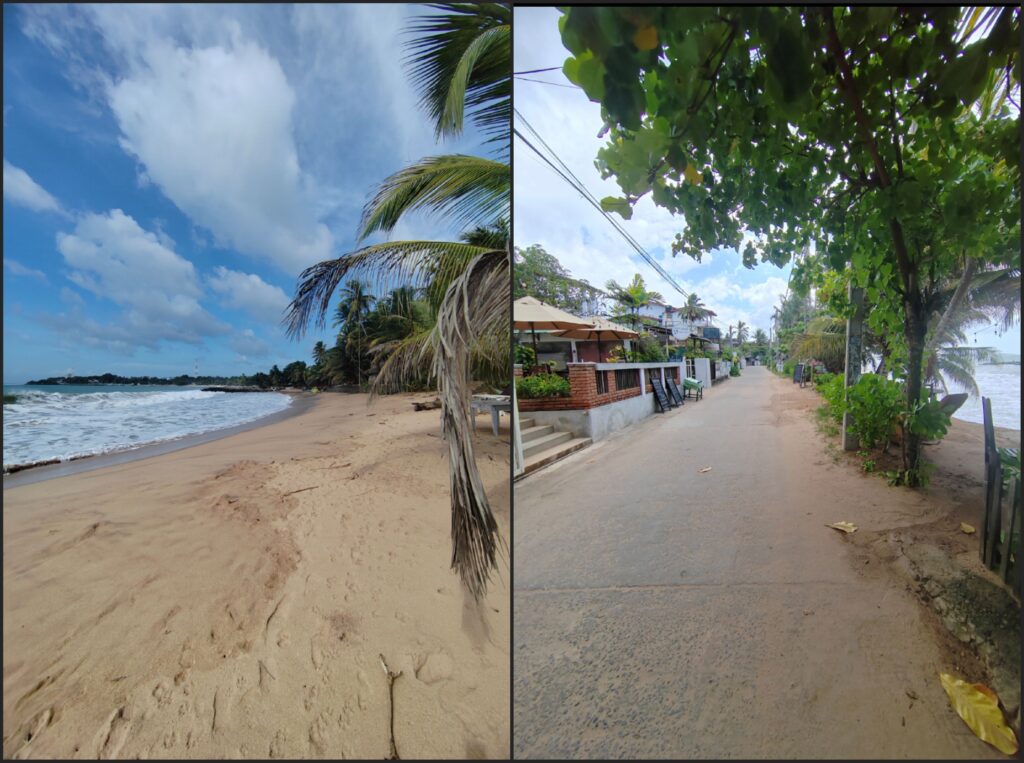
East is way more beach. A lot more. Walking south at the beach is difficult when you start from the west, because there are some wave breakers or rock formations that urge you twice to go either through deeper water or back to the road. After these two obstacles there’s one river where you have to take a bridge, but after that I think your good to walk some kilometers of beach, which later becomes Rekawa beach. The road behind the beach is small and quiet, because it is not the main main road highway (the A2) like in Merissa or Hikkaduwa. Some restaurants were closed, but there was still a good choice available. Travellers were a rare sighting in Tangalle in September.
In the Western part of Tangalle Beach is the actual town, which is quite large and busy. Here you can find a lot of shops.
Kirinda: The hidden gem for introverts
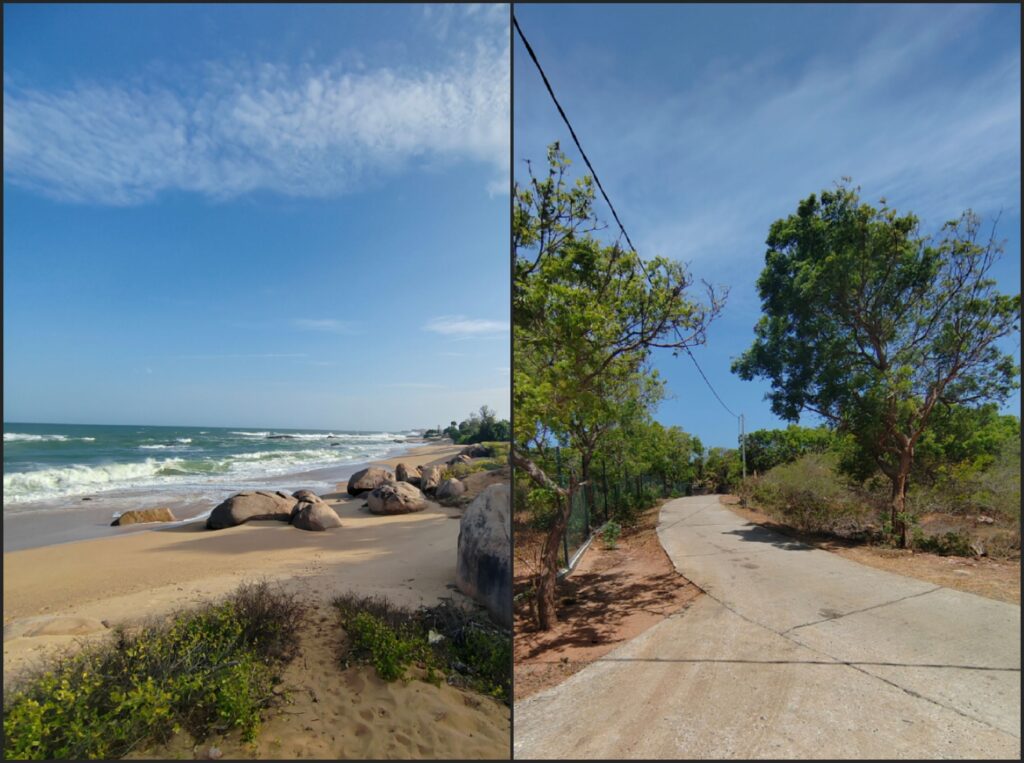
How to keep a secret and make it public at the same time? You can’t. So I won’t promote this area much, see for yourself. Or don’t. The title says it all. It’s not far from Yala National Park.
There’s a few explanations for the name. Kirinda might be related to Abrus precatorius, the jequirity bean or rosary pea, a highly poisonous and invasive climbing plant that produces pretty red fruits which are used for jewelry and trade. Or it means Coix lacryma-jobi, a grass called job’s tears. Or does it come from kiri, meaning milk?
Hikkaduwa: 3 in 1
The actual Hikkaduwa Beach is rather small. What I confused it with is Narigama beach, which is south of it. Between both sits Turtle beach, a spot where turtles are being fed I believe. In low season I did not see any turtles, and no feeding of course.
The proper Hikkaduwa Beach was the one with the most trash in and near the water. I guess the currents and winds are just not in favor of this part. Otherwise the beach is nice for walking, and in one corner of it people would play in the water. There are a few bars and hotels, but the beach was very quiet, with almost no party vibes. I had the impression that the sand here was extra sticky to the skin, but I can’t say if that’s true or just a wrong impression.
Turtle beach is tiny. I was there when the Coral Catch festival was happening. It wasn’t much of an event, but very loud what made me questioning the choice of turtle beach here..
One hotel and some rocks divide these two beaches.
Narigama beach is a longer stretch, and it has a popular place called Amaroo. And this was in September the only place with people. The rest of the beach was in a devastating state. It didn’t only look paused for off season, there were too many ruins, too much garbage and too little effort to keep the beach enjoyable for the few guests.
People go there for scuba diving, snorkeling, and surfing, but again, September is not the best time for water activities in the southwest of Sri Lanka. There’s also a Tsunami museum, because Hikkaduwa was hit hard in 2004.
I found four different translations for Hikkaduwa, it’s either derived from shells (the coral reef), sword of knowledge, ceremonial masks, or head village like capital?!
Unawatuna: Tacos and locals
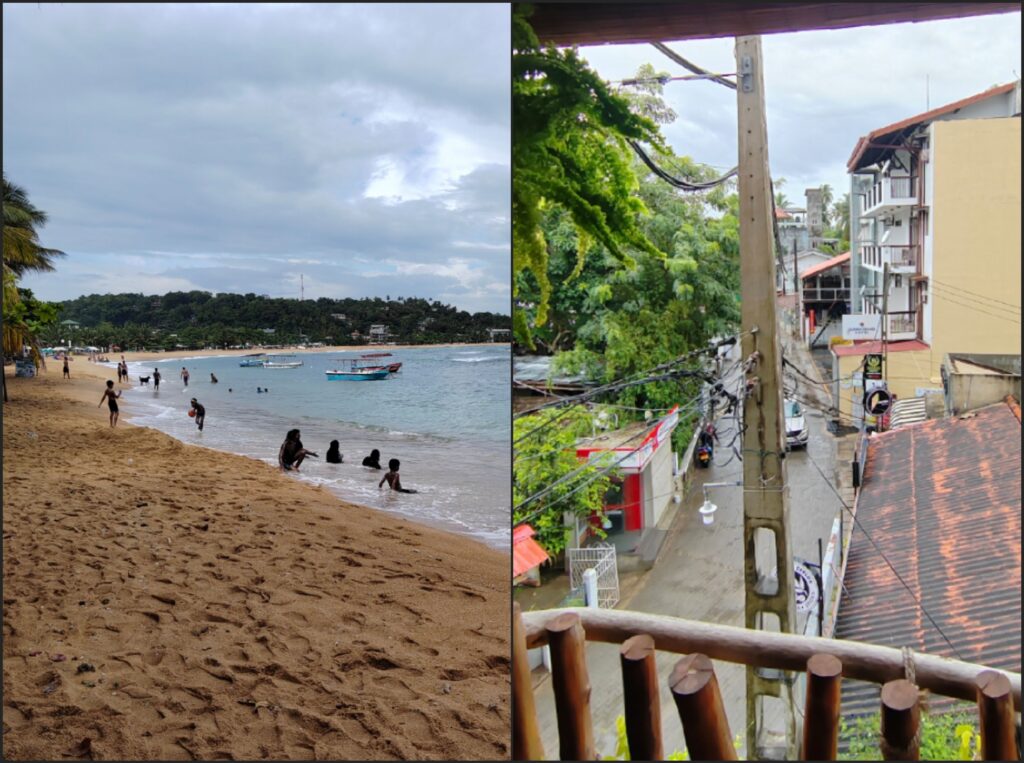
I totally get the focus on Russian visitors in Sri Lanka. And since language is a barrier often, it makes sense to translate signs and menues to Russian. What surprised me much more though was Unawatuna’s focus on Mexican food. I had tacos, burritos, guacamole and nachos. Where is that coming from? I can’t say I had the same experience in other places. Not that extreme. Extreme was also the traffic, probably because I’ve spent a weekend and a public holiday there. Locals seemed to love this beach, so the traffic was high on the otherwise small road behind the beach. There weren’t many foreign guests. I had a whole hotel mostly to myself. There were a few smaller supermarkets, and a 10min walk away on the busy main road there was a Cargills. Restaurants were plenty, often with focus on the Mexican cuisine.
The beach itself is rather small, and in the North there is a huge hotel. You’ll find some trash, but not too much. The sand is the typical golden brown, medium fine sand with almost no rocks or coral bits in it.
Matara: Just take the bus
I’m reporting my personal experience here, and of course I hope other visitors have better stories to tell. I saw Matara twice because it is one of the main bus stations, so I had to change the bus there. From the few negative experiences during my 53 days trip through Sri Lanka, two occured here. First time I went there I was so hungry that I picked a restaurant in Matara. It was empty, and for whatever reason the two gentlemen didn’t want me there. That never happened anywhere else in Sri Lanka to me. Second, the bus out was a bit weird, they charged me 600 Lkr to Merissa, what was at least double the normal price.
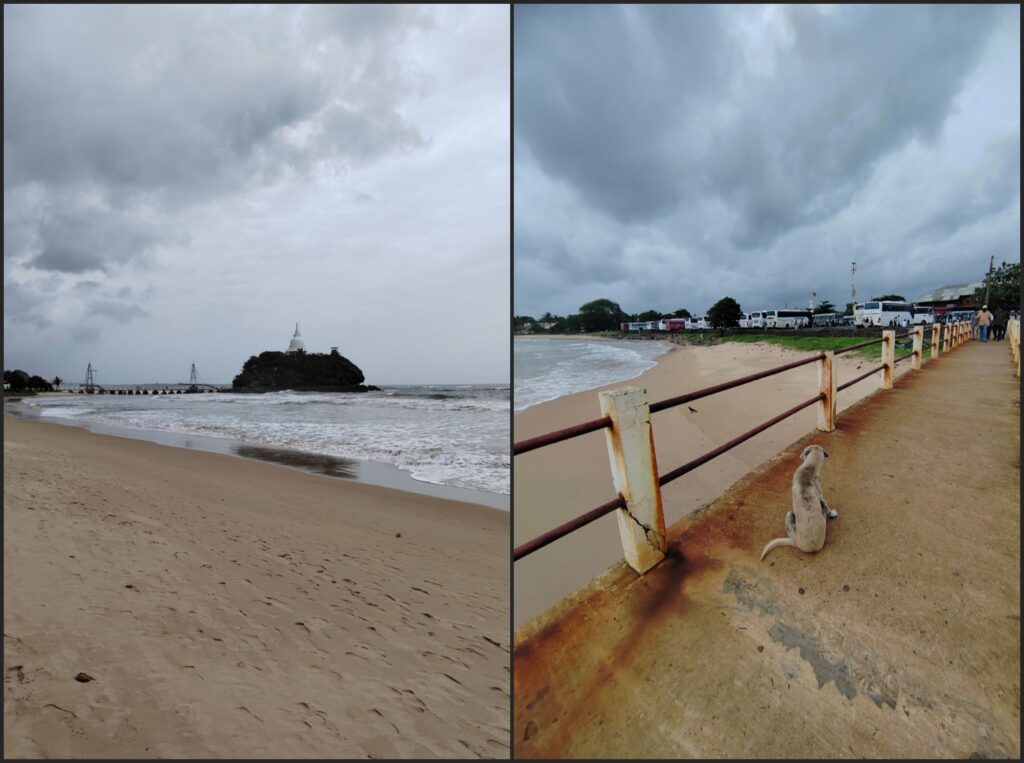
The beach near the bus station is not for swimming or sunbathing. There is a rusty bridge to Pigeon island, which doesn’t help the scenery. I met a mangy dog on that bridge. You can sense my enthusiasm for Matara.
If you made it all the way down here, let me give you a personal tip for a trip to Sri Lanka. Don’t limit yourself to one or two places. In low season you can easily find a nice hotel or homestay for the next day. Try something, and stay longer when you like it, or leave if you don’t.